
The Challenge
The United States is often seen as one of the world’s wealthiest countries. Yet millions of people still experience deep poverty, unstable housing, food insecurity, medical debt and other forms of hardship. At the same time, U.S. charitable giving is at record levels. The core challenge is simple: need is complex and often hidden, while funding is generous but fragmented.
1. A Wealthy Nation with Uneven Realities
In 2024, the official U.S. poverty rate was around 10.6%, representing roughly 35.9 million people living below the federal poverty line. But this headline number hides as much as it reveals. Poverty and hardship are not spread evenly:
Some states, cities and counties experience much higher poverty rates than the national average.
Certain neighbourhoods and communities face overlapping challenges in housing, health, education and employment.
Racial, ethnic and regional disparities in poverty and hardship remain stubborn and persistent.
Poverty is not just about a number on an income line. It is about whether people can secure housing, keep the lights on, access healthcare, feed their families, and build a stable future.


2. Hidden Poverty and ALICE Households
A growing share of U.S. households live above the official poverty line but still cannot afford a basic survival budget. These are often called ALICE households – Asset Limited, Income Constrained, Employed.
Hidden poverty includes households that:
Have incomes just above the official poverty line
Face high housing, childcare, transport or medical costs
Experience chronic stress, arrears and trade-offs (like rent vs. medicine)
Often do not qualify for traditional support programs
These families and individuals may not show up as “poor” on paper, but they are one shock away from crisis. They are central to any serious poverty and resilience agenda in the U.S.
3. Record-High Giving, Fragmented Impact
At the same time, U.S. charitable giving is at or near historic highs, with hundreds of billions of dollars donated each year by:
Individuals and families
Foundations and donor-advised funds
Corporations and corporate foundations
Faith-based and community organisations
Yet:
Giving is increasingly concentrated among high-wealth donors, foundations and corporations.
Funds are often distributed through separate, uncoordinated channels.
Many decisions still rely on habit, relationships, or compelling stories rather than a shared, data-informed picture of need and what works.
The result is that some communities and issues receive multiple overlapping streams of support, while others with equal or greater hardship remain underfunded or invisible.

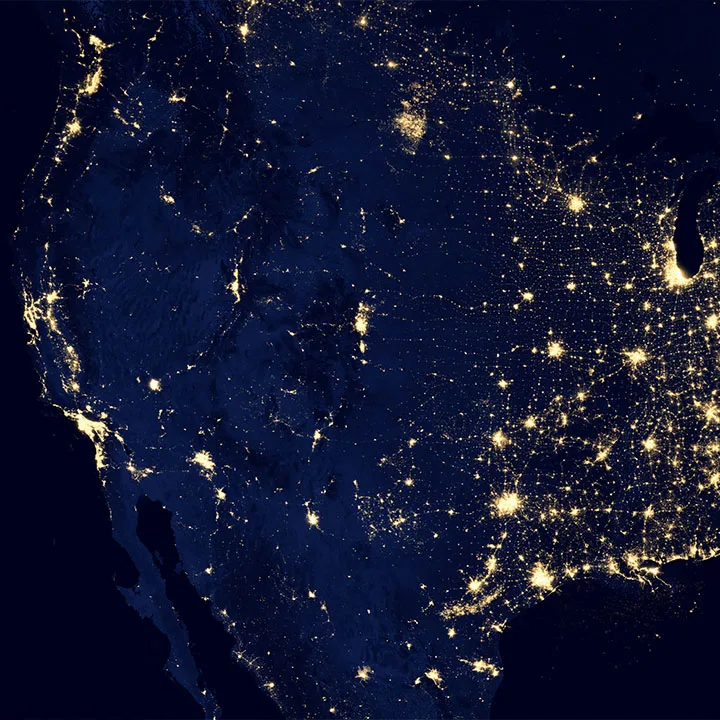
4. Data is Abundant – but Disjointed
The U.S. does not suffer from a lack of data. There are:
Official income and poverty statistics
Research on multidimensional poverty and hardship
GIS and mapping tools
ALICE-style and hardship indices
Programme evaluations and impact studies
The problem is that this information is:
Scattered across agencies, platforms and formats
Hard to use in day-to-day funding decisions
Often backward-looking, not tuned to emerging risks
Not linked in a way that helps people answer practical questions like:
Where is hardship most concentrated right now?
Which interventions are most promising in this context?
What impact are our dollars really having over time?
Even when good evidence exists, it is often underused in real allocation decisions.
The Core Challenge ImpactLink Exists to Solve
Summed up in one statement:
America has serious poverty and hardship, vast philanthropic resources and rich data and evidence – but these realities are not yet connected in a coherent, practical way.
In other words:
Need is complex and often hidden.
Funding is generous but fragmented.
Data is abundant but disjointed.
Evidence exists but is underused.
This is the gap ImpactLink is designed to bridge.
We are building a U.S.-based impact intelligence platform that:
Makes hidden and multidimensional poverty visible
Gives funders and partners a shared, data-driven map of need and opportunity
Helps turn generosity into informed, accountable, high-impact action
From fragmented aid to a dignity-first safety net
ImpactLink is not just software — it is a new infrastructure of trust, where donors, NGOs, CSR arms, and communities work together in one transparent system.